
NMT Crane Hire NMT Crane Hire WELCOME, WE ARE OPEN FOR BUSINESS AS USUAL

CALL: 0800 026 6985
EMAIL: hiredesk@nmtcranes.co.uk

How Are Construction Cranes Erected

Posted in News MediaLeave a Comment on How Are Construction Cranes Erected

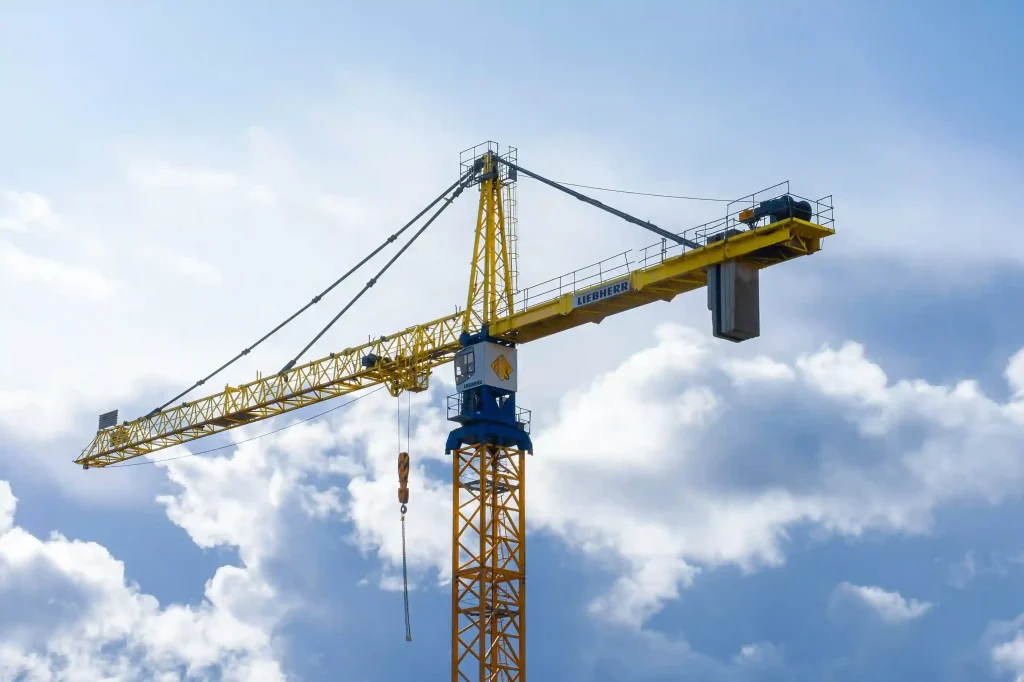
Construction cranes are some of the tallest machines on any job site, often rising hundreds of feet into the air. Many people assume they arrive fully built, but that’s not the case. In reality, cranes are assembled piece by piece through a carefully planned process designed for strength, balance, and safety. If you are interested in how construction cranes are erected, then we are here to explain the process clearly. 

Aside from the set ups, if you are thinking of hiring a crane company for your needs or actually getting into a team like ours, get in touch today and we will help you the best we can!

What Type of Construction Cranes Are We Talking Of?

When people think about cranes towering over city skylines, they are usually looking at tower cranes. Tower cranes are a powerful kind and have a lot to offer. Their set ups can be a long process taking roughly 2-5 days and are of course done in sections. Further inspections may be needed after erection. The kinds of work you can expect these cranes to be erected for are:

  • Apartment towers
  • Office skyscrapers
  • Hotels and mixed-use developments
  • Hospitals
  • Universities
  • Airports
  • Convention centers

Why are tower cranes used?

There are many reasons tower cranes are used for construction work. Tower cranes are used on large construction projects because they can lift heavy materials to great heights while taking up very little space. They are commonly used on high-rise and commercial builds where a fixed crane can remain on site for long periods. Their ability to grow taller as construction progresses makes them efficient, stable, and well suited for dense urban environments.

So, How Are Construction Cranes Erected?

Step 1: Preparing the foundation
The process begins with constructing a reinforced concrete foundation. This base is engineered to support the crane’s weight and the loads it will lift. Once poured, the concrete must cure and pass inspection before assembly begins.

Step 2: Assembling the mast
Next, a mobile crane lifts and stacks the vertical mast sections. Each section is bolted securely into place, creating the tall central tower that gives the crane its height.

Step 3: Installing the slewing unit and jib
The rotating unit is installed on top of the mast, followed by the horizontal jib and counter-jib. Counterweights are added to balance the crane and allow it to lift heavy materials safely.

Step 4: Testing and certification
Before the crane is put into service, it undergoes thorough inspections and load testing. This ensures the crane meets safety standards and operates correctly.

Step 5: Climbing the crane as the building rises
As construction progresses, the crane can be raised higher using a self-climbing system. New mast sections are added beneath the crane, allowing it to grow along with the building.
How To Ensure The Process Is Safe?

Crane erection is carefully planned and carried out by trained professionals following strict safety procedures. Before work begins, our engineers create detailed erection plans that account for load limits, ground conditions, and weather.

During assembly, ourselves at NMT Crane Hire, install each crane section in a controlled sequence, with every connection checked for alignment and strength. Wind conditions are closely monitored, and work is paused if conditions become unsafe.

Once the crane is erected, it undergoes inspections and testing before being approved for use. These steps ensure the crane can operate safely throughout the project.

Need Us For Professional Crane Support?

If you are asking yourself “How are construction cranes erected?” and need our help setting up cranes or to discuss a project with our team, then get in touch with us today and we will be more than happy to help. We have decades of experience and have become highly trusted in several areas – trust us as professionals!

Frequently Asked Questions

Do all construction cranes follow the same erection process?
No. This process applies to tower cranes. Other cranes, such as mobile cranes, arrive mostly assembled and require less setup.

How are tower cranes dismantled?
Tower cranes are dismantled in reverse order, often using a mobile crane or by lowering sections using the crane’s own systems.

Is crane erection dangerous?
Crane erection is a controlled process carried out by trained professionals using strict safety procedures and inspections.

How To Build A Realistic Crane Programme

Posted in UncategorizedLeave a Comment on How To Build A Realistic Crane Programme

Cranes are not the same as hiring a photographer for the day. It needs far more planning taking into consideration safety, timing, access, permits. Our team at NMT Crane Hire can help out with an entire range of projects with our main ones including Film & TV and large scale industrial developments. With the help of some crane management you can expect a process that works in your favour the entire time. 

Why Is A Plan Necessary

In some work schedules and plans, you can be flexible and adjust times, people and more to suit a better idea. When a crane is involved, it eliminates that freedom. With good preparation up front, you gain much more certainty. You’re ready for inspections, permits and access checks, and you’re in a far better position to handle last-minute changes or cancellations.

Without A Plan You Can Expect The Following

Cranes turning up with nothing ready to lift
The crane and crew are on site, but the load isn’t prepared or the area isn’t cleared, so you’re paying for them to wait.

Crane can’t get in or set up where you’d planned
Parked cars, street furniture, tight corners or weak ground mean the crane can’t reach the agreed position.

Booked crane too small or can’t reach the load
The weight or radius was guessed, so the crane on the day isn’t safe to make the lift.

Lifts cancelled due to missing permits or parking suspensions
Road closures, TM, or bay suspensions haven’t been approved, so the job is stopped before you even start.

Trades and deliveries clashing with the crane’s working area
Other contractors are working or storing materials in the lift zone, forcing everything to be moved at the last minute.

Operator refusing to lift because paperwork isn’t in place
No agreed lift plan, RAMS or Appointed Person means the operator can’t legally or safely go ahead.

Rebooked cranes, extra visits and standing time charges
The lift has to be aborted and rearranged, adding more hire costs, more TM and more disruption to your programme.

What Steps Your Planning Should Include

There are many different procedures and steps you could include to make an efficient plan but sometimes quantity isn’t quality. In an instance where a crane is involved, there may be some that you hadn’t already thought of, here are them:

1. Confirm what you’re lifting and when

Lock in the basics first.

  • What are you lifting
  • How heavy is it and how big is it
  • How many lifts will there be and on which days
    This lets the crane team choose the right crane and configuration instead of guessing.

2. Map out access and crane set up

Plan how the crane and the load will get in and out.

  • Vehicle routes in and out of site
  • Where the crane will stand and slew
  • Any tight corners, low bridges or height limits
    Photos, videos and simple sketches are really useful here.

3. Arrange a site visit and lift plan

For anything more than a very simple lift, schedule:

  • A site visit from the crane company
  • A formal lift plan and RAMS
    This is where ground conditions, radius, obstacles and safe working areas are nailed down.

4. Build permits and traffic management into your dates

If you are near a road or public space, add time for:

  • Road closures or lane closures
  • Parking suspensions and access permissions
  • Traffic management booking and approvals
    These all have lead times, so they need to sit in your programme, not as an afterthought.

5. Coordinate trades and deliveries around the lift

Make sure other activity does not clash with the crane.

  • Keep the lift zone clear of scaffolding, roofers and other trades
  • Time deliveries so loads arrive ready to be lifted
  • Avoid booking other noisy or disruptive works at the same time
    The crane should be the focus during the lift window, not fighting for space.

6. Allow for weather and backup dates

Cranes and high winds do not mix.

  • Identify critical lifts that may need a backup day
  • Keep some flexibility in your programme for weather delays
  • Agree how and when decisions will be made
    This keeps everyone calm if the forecast changes.

7. Confirm who is in charge on the day

Finally, be clear about roles.

  • Who is the main contact for the crane crew
  • Who is the Appointed Person if it is a contract lift
  • Who can make decisions if something changes
    Good communication means fewer surprises once the crane is on the clock.

Contact Us & Get Planning Today

Get in contact with our team at NMT Crane Hire for more support and understanding of the required planning processes when a crane is involved in your projects.

The Most Powerful Cranes In The Industry

Posted in UncategorizedLeave a Comment on The Most Powerful Cranes In The Industry

Regardless of whether you are in the crane industry or others such as: cars, beauty, healthcare etc, everybody wants to know the best resources available and this could be because of their power, durability, aesthetic, and many other reasons.

In this blog, we will be covering some of the UK’s most powerful cranes in our industry and outline the key specs to watch, so you can choose the right crane for the job – which could very well be one of our own!

What Do We Provide Here At NMT

It will be important for you to take away not only the strongest kinds of cranes, but equally where you can access them if you want one. With ourselves at NMT we offer a variety that can be useful for a range of projects whether this be simple lifting or Film & TV needs.

Here are the different ranges we have aside from our accessories:

  • Light Truck Cranes
  • Lorry Loaders
  • City Cranes 13 – 50 Tonnes
  • All Terrain Vehicles 35 – 160 Tonnes
  • Heavy Vehicles 500-700
  • Mobile Tower Cranes

The strongest out of those are of course the heavy vehicles being able to hold 500-700 Tonne. But we will look into the best and strongest options of all of those, some of which we could offer ourselves!

When it comes to our cranes we have a variety of cranes that can hold different weights because we have a mix of different client bases and needs. With us you can expect a solution no matter what it may be.

So, What Is The Heaviest Of Those Listed

If you are comparing cranes by type, it helps to know the heaviest credible example in each class. Below are named models that sit at the top end for their category, followed by a plain English explanation so readers know why they matter and when to choose them.

Heavy Vehicles 500 to 700 tonnes

Examples to research: Liebherr LTM 1650-8.1, Demag AC 700-9

This class delivers the biggest lifts on rubber. They are used for heavy industrial work, bridge sections and large wind components. Setup is complex and transport loads are high, but you get serious capacity with strong charts at short to medium radius.


This is great news as at NMT we offer the Liebherr LTM 1500 – 8.1 meaning we are building a popular heavy vehicles collection.

All Terrain Vehicles 35 to 160 tonnes

Examples to research: Grove GMK5160-1 or Tadano ATF 160G-5

Both are 160 tonne class all terrains widely used in the UK, balancing road speed with solid charts for regional projects.

City Cranes 13 to 50 tonnes

Example to research: Demag AC 45 City

Compact city cranes popular in the UK. Excellent for tight access jobs where you still need a capable chart and quick setup.

Lorry Loaders

Example to research: Palfinger PK 200002 L SH

One of the heaviest loader cranes available in the UK. Great for short radius heavy picks and precise placement from a truck chassis.

Mobile Tower Cranes

Examples to research: Spierings SK2400 AT7

A go-to heavy mobile tower crane in the UK. Prioritises reach and fast mobilisation for urban sites. You will be happy to know that we have that exact crane within our business ready for you to hire today!

Light Truck Cranes

Example to research: Böcker AK 52

High reach truck crane available through UK dealers. Ideal for glazing, signage and lighter plants where roadability matters.

Why Might You Need A Powerful Crane

Heavy components
Some loads are simply beyond mid range charts. Large chillers, transformers, bridge beams and precast cores demand higher capacity so the lift stays within safe utilisation. Extra headroom also helps when the final weight is uncertain until the day.

Long radius or significant height
Capacity falls as reach increases. If you must place plants deep onto a roof, reach across a live road or span a river, a stronger crane keeps the lift compliant at the working radius without compromising the setup.

Programme efficiency
A bigger crane can lift larger assemblies in one go. That often reduces splice work at height, cuts rigging changes and shortens road closures. One clean pick of a skid unit or longer girders can save hours on site and keep trades moving.

Site constraints
Urban streets, refineries and tight yards rarely allow full outrigger spreads or perfect ground conditions. More capable charts let you achieve the same lift with a smaller footprint, limited matting or awkward access routes.

Safety margin and compliance
Weather, extra rigging and shifting centres of gravity all eat into capacity. Choosing a stronger crane builds in sensible margins for wind and rig weight, and helps meet client standards that cap chart utilisation or require backup options.

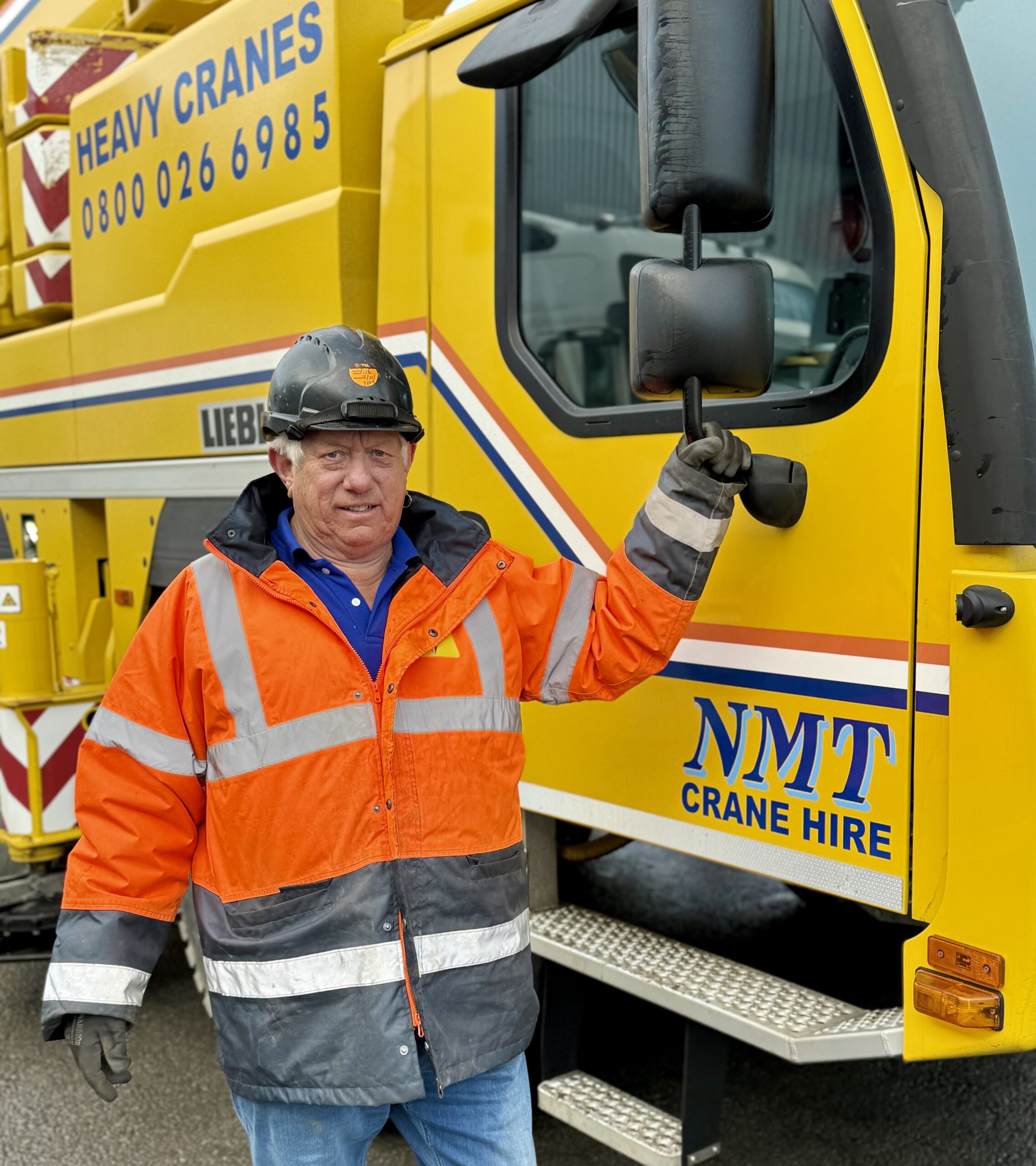
NMT worker next to Heavy Vehicle

Choose the Right Crane Company

Here at NMT, we have many business features that contribute to our success in the following areas: Birmingham, Buckinghamshire, Cambridge, Luton, London, Northampton, Oxford, St Albans and Watford.

NMT has served UK projects since 1976, bringing close to 50 years of practical lifting and crane experience. We pride ourselves on being customer-focused and tailoring every project uniquely to our customers and their needs.

Contact Us Today

Get in contact with NMT to get your crane needs attended to. With an extensive fleet of vehicles you can expect to be thrilled with your choices. Call or email us today!